

Rabbit Holes 🕳️ #36 | Special Edition
From Amazonizing the world, to the beauty of not knowing, and the big reconnect.

As promised, another special edition of Rabbit Holes – if you missed special #1, click here – featuring a new set of three of my favorite creators out there. Again, don’t forget to check out their work!

Rabbit Holes 🕳️ SPECIAL
Three perspective-shifting ideas from Rodrigo Turra, Rick Evans and Florian Schleicher:
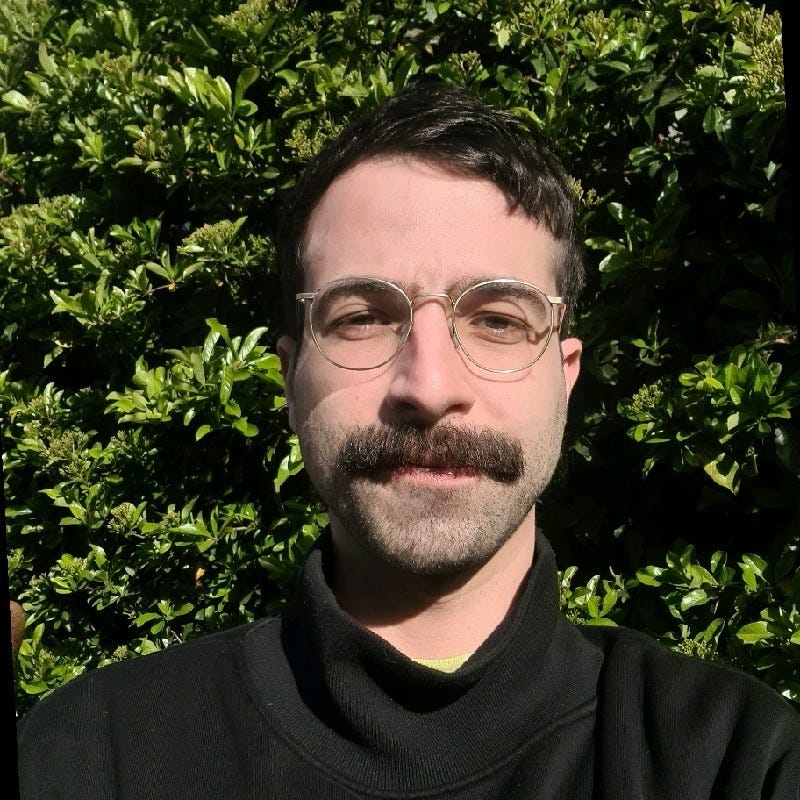
🗨️ RODRIGO TURRA
“Brazilian human-in-the-loop based in Amsterdam. Author of the weekly newsletter, The Nexialist, where I share serendipitous brainsparking content.”
Rodrigo’s newsletter: The Nexialist
His website
His LinkedIn
“[Amazonizing the world] is just a seedling, allowing us to imagine more hopeful possible futures, rooting the Amazon at the center of the debate and spreading the movement to the rest of the world.”
What’s a perspective-shifting idea or rabbit hole that you’ve recently come across?
Rodrigo: “Amazonizing the World.
The first time I heard this expression was in Altamira 2042, a dystopic sci-fi performance by Brazilian artist/researcher Gabriela Carneiro da Cunha.
‘There is a great war taking place between two forces: Progressians are the ones who want to turn the world into deserts. Only their way of living is valid. Aliendiginous understand plurality of life is necessary. The Aliendiginous people are on the mission to Amazonize the Amazon in order to Amazonize the World.’”
Why is this interesting?
Rodrigo: “There is something powerful about making it a verb, just like in the Queering the Future movement. It adds layers of life and action as it encompasses different elements such as the centuries-old resistance of indigenous and forest peoples, thoughts informed by their ancestral and plural perspectives, and including more-than-humans in the narrative, just to name a few.
Since then, this idea seems to be sprouting across different areas. Brazilian President, Lula, appointed the first indigenous woman, Joênia Wapichana, to lead the new Ministry of Indigenous Peoples. Also, based in Altamira, the frontline of the ongoing war on nature, Sumaúma, “journalism from the center of the world” was founded, keeping institutions accountable and creating content in Portuguese, Spanish, and English. In the arts, we are seeing revolutionizing pieces like Altamira 2042 and Antigone in the Amazon. In pop culture, the world is also having more access to the Amazonian gaze. From Beyoncé’s photos for British Vogue, shot by Rafael Pavarotti, who is from Pará to the Netflix series Invisible City, which brings Brazilian folklore to the present day, also depicting forest conflicts.
In an optimistic take, Brazil could be leading a shift towards a greener economy. But this cannot be done in a vacuum. This is just a seedling, allowing us to imagine more hopeful possible futures, rooting the Amazon at the center of the debate and spreading the movement to the rest of the world.”
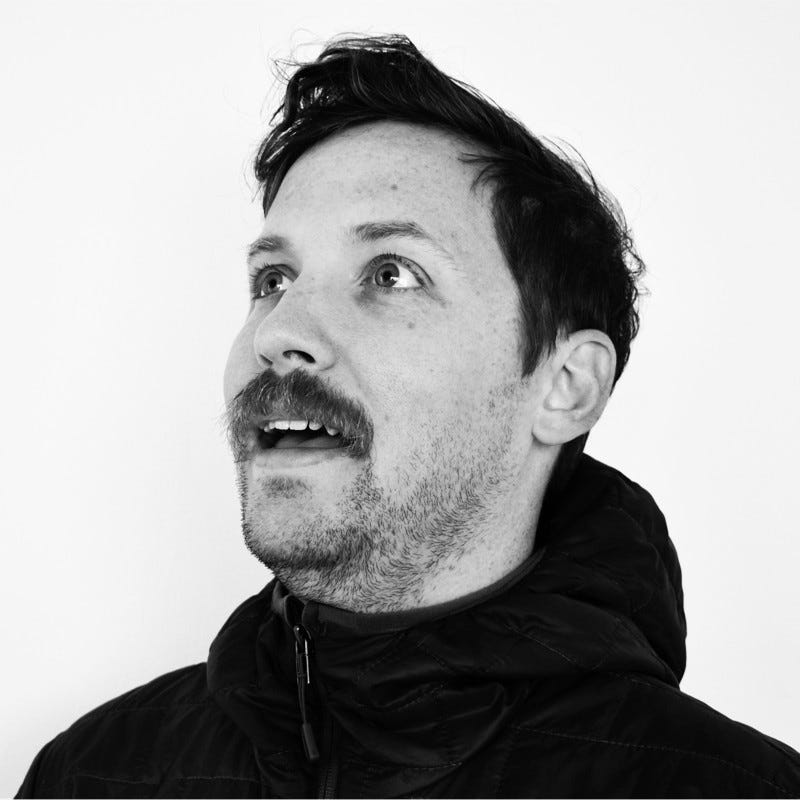
🗨️ RICK EVANS
“I make money as a brand strategist but spend a good chunk of my free time exploring. My current project is a podcast with some amazing guests about how we can improve the relationship between people and planet through the medium of food.”
Rick’s website
His ‘You Can’t Eat Money’ podcast
Rick’s LinkedIn
“As a strategist who likes to practice in different areas from brand and comms to innovation and product development, knowing is deadly. The moment I think I know something with certainty, I am placing myself in a box of my own making that limits the possibility of my work.”
What’s a perspective-shifting idea or rabbit hole that you’ve recently come across?
Rick: A few years I connected with an amazing dude named Duke Stump. Duke is a brand guy with an incredible body of work, but our chat ended up going in many different directions - horsemanship, Buckminster Fuller, biomimicry and Jiddu Krishnamurti. A few years before our chat, Duke delivered an amazing talk titled 'The Beauty of Not Knowing':
This talk pulls from a Krishnamurti quote which is often shared as 'beware the man who knows.' I did some digging and found an alternate version in Krishnamurti's book 'Think on These Things':
‘A man who says he knows is already dead. But the man who thinks, “I don’t know,” who is discovering, finding out, who is not seeking an end, not thinking in terms of arriving or becoming—such a man is living, and that living is truth.’”
Why is this interesting?
Rick: “I was already familiar with the Zen Buddhist idea of 'The Beginner's Mind' but Krisnamurti's approach is more direct. In every aspect of work and life, it challenges me to think about what I think I know, and even what is truly knowable. As a strategist who likes to practice in different areas from brand and comms to innovation and product development, knowing is deadly. The moment I think I know something with certainty, I am placing myself in a box of my own making that limits the possibility of my work.”
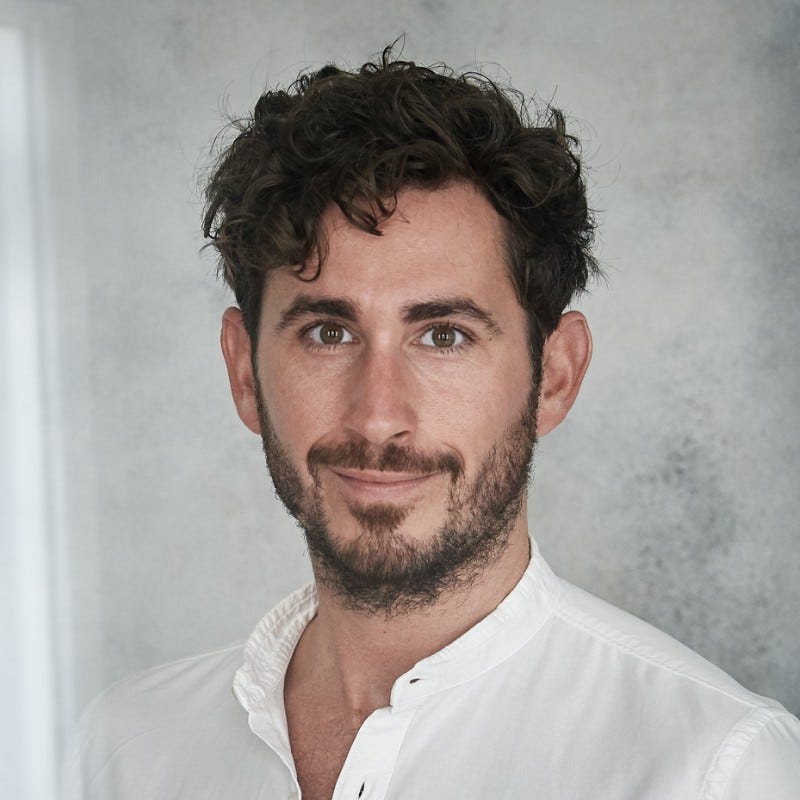
🗨️ FLORIAN SCHLEICHER
“I am a Marketing coach and strategist. Bringing experience from brands like McDonald’s, Greenpeace and Too Good To Go to the table, I now help companies to achieve goals AND sustainable growth.”
Florian’s newsletter: MarketingFutureS
His website
His LinkedIn
“I realised the impact that marketing has to our current situation and crisis. And the impact it can have to a solution. If we are able to tell stories that create value in and for all three areas - people, planet and profit, marketing can have a huge impact and become a force for good.”
What’s a perspective-shifting idea or rabbit hole that you’ve recently come across?
Florian: “For quite a long time the “big disconnect” has bugged me: Why is it that there is so much talk about sustainability and we still produce even more CO2 emissions?
Then during reading The 7 Graces of Marketing by Lynn Serafinn and The Power of Ritual by Casper Ter Kuile it hit me: We have lost our connection with two dimensions - people and planet - by only focusing on one - profit. We became obsessed with enhancing what we define as value - money. So naturally, our strategies addressed the needs of people and the planet only in some actions, but always had money at the center, which is not natural at all.
Marketing plays a big role in this approach, because we marketeers create needs and plant ideas in people’s minds. We define what ‘value’ is.
If we think about planet, people & profit in equal parts at the beginning of our campaigns, strategies and solutions, each of them will provide value to our lives. And create a new story.”
Why is this interesting?
Florian: “This shift of perspective was especially interesting to me, because I realised the impact that marketing has to our current situation and crisis. And the impact it can have to a solution. If we are able to tell stories that create value in and for all three areas - people, planet and profit, marketing can have a huge impact and become a force for good. Marketing can achieve goals AND create sustainable growth. Let’s make delivering on sustainable promises as sexy and valuable as talking about it, to achieve a ‘big reconnect’.”
That’s it for this second Rabbit Holes Special!
Huge thanks again to Florian, Rick and Rodrigo for their contributions! Please check out their amazing work!
Next week, we are back with the usual Rabbit Holes.
Cheers,
Thomas