

Rabbit Holes 🕳️ #47
From reverse logistics culture to colonial and decolonial histories and trending ecovillages

THIS WEEK → 📦 Reverse Logistics Culture 🗿 Colonial & Decolonial History 🏡 Ecovillages Are Trending

Rabbit Holes 🕳️
As always, here are three perspective-shifting ideas that I’ve come across lately, plus some fun extras. Enjoy!
#1 📦 Reverse Logistics Culture
Returning things when we don’t like them (or they don’t fit) and buying new things when they break are both behaviors that have become so embedded in our lives and minds. What does that do to us? To society? And what’s actually happening with all that stuff that we send back? The article below looks at the massive, weird industry of reverse logistics.
“For some online apparel retailers, returns now average forty per cent of sales. […]
Steady growth in Internet shopping has been accompanied by steady growth in returns of all kinds. A forest’s worth of artificial Christmas trees goes back every January. Bags of green plastic Easter grass go back every spring. Returns of large-screen TVs surge immediately following the Super Bowl. […] People who’ve been invited to fancy parties sometimes buy expensive outfits or accessories, then return them the next day, caviar stains and all—a practice known as “wardrobing.” […]
The annual retail value of returned goods in the U.S. is said to be approaching a trillion dollars.
Most online shoppers assume that items they return go back into regular inventory, to be sold again at full price. That rarely happens. On the last day of the R.L.A. conference, I joined a “champagne roundtable” led by Nikos Papaioannou, who manages returns of Amazon’s house-brand electronic devices, including Kindles, Echos, and Blink home-security systems. He said that every item that’s returned to Amazon is subjected to what’s referred to in the reverse-logistics world as triage, beginning with an analysis of its condition. I asked what proportion of triaged products are resold as new.
“It’s minimal,” he said. […]
You might think that retailers would be pleased when customers fail to send back items they don’t want, but that isn’t true if those customers remain unhappy. One of the most popular presenters at R.L.A. was Spencer Kieboom, a former major-league baseball player, whose company, Pollen Returns, uses underemployed rideshare and delivery drivers to pick up unwanted items, for free, at buyers’ homes, thereby sparing them the nuisance of schlepping things to UPS on their own.
Some retailers simply refund certain purchases, no need to send anything back. […]
Last year, in an official statement, Amazon told CNBC that none of its returns are sent to landfills. All that really means is that Amazon itself doesn’t send anything to a landfill, but many returns obviously get there anyway, and some avoid it only by being diverted to what the company described to CNBC as “energy recovery,” a euphemism for burning in a furnace.”
» The New Yorker | What happens to all the stuff we return? by David Owen
#3 🗿 Colonial & Decolonial History
I just finished a free walking tour in Sydney with the person that was showing us around doing quite a good job telling us both the colonial and indigenous history of the city (or at least pointing it out). A great reminder that there is history…and then there is history!
“PAPÀ, MY DAD, told me a story long ago about the uranium that powered the first nuclear bombs. The ones dropped on Hiroshima; the bombs you saw being built in this summer’s dramatic film, Oppenheimer. Papà, you see, was born in the Belgian Congo.
Earlier this summer, I was invited to a screening of the blockbuster. The film’s director, Christopher Nolan, was there too. In a recurring scene, meant to symbolize the inching along of the scientists’ efforts, Oppenheimer fills an empty glass bowl with marbles—first one at a time, then in handfuls. The marbles represent the amount of uranium that has been successfully mined and refined to power the nuclear reaction. […] But there’s no mention in the film of where two-thirds of that uranium came from: a mine 24 stories deep, now in Congo’s Katanga, a mineral-rich area in the southeast.
As the marbles steadily filled the bowl onscreen, I kept seeing what was missing: Black miners hauling earth and stone to sort piles of radioactive ore by hand.
Papà was born in 1946 at Mission Ngi, a tiny Belgian missionary outpost. He told us how, growing up, the Belgians taught the Congolese to worship God; how the Belgians addressed Congolese adults with the informal French tu, not the formal vous; how the Belgians said eating with your hands, as Papà did at home, was uncivilized. The Congolese were backward and ancillary to modern life, Papà learned in school. So did I. And yet, Papà said, the Congolese were the essential ingredient, the sine qua non, of arguably the most consequential creation in modern history.”
» Wired | The Dark History Oppenheimer Didn’t Show Us by Ngofeen Mputubwele
#3 🏡 Ecovillages Are Trending
I’m not sure if ecovillages are the “solution” (as the article below says: “most (90%) aspiring ecovillages fail). But I am sure that the desire a growing number of people that join ecovillages have, namely, this urge to reconsider our way of life, the way we live and to connect more with nature and people, will definitely keep on growing and become more mainstream.
“An increasing number of people around the world are joining or creating ecovillages, spurred by concerns about climate change to reconsider their way of life.
Today, there are more than 10,000 ecovillages globally, mainly in rural areas, where people are building societies that are socially, economically and ecologically sustainable. These ecovillages are extremely diverse: they can be secular or spiritual, traditional or intentional, on or off the grid. While some ecovillages are quite radical in their politics, sharing everything from financial resources to bedrooms, others are rather mainstream, with people still living in separate homes, working day jobs but also sharing garden spaces and utilities. Despite these differences, ecovillages typically share the worldview that capitalism and industrialization have disconnected us from ourselves, each other and, especially, nature. Ecovillages are an attempt to restore these links. […]
Mathieu Labonne, the network’s director and founder of the Plessis ecovillage, estimates that roughly 100 new villages are created in France annually. There is even a quarterly magazine for French ecovillages called Passerelle Eco, which over the course of its 81 editions, has featured the latest news about ecovillages around France. “We are seeing an emergence of these villages,” said Christophe Monnot, an expert on eco-spirituality and an assistant professor on the sociology of religion at the University of Strasbourg. “It’s not a tsunami but it’s a movement.” […]
“Ecovillages have always attracted young idealists and older people with money and new-age sensibilities,” Whitlock said. “But now you have a lot of families living mainstream lives who are looking for something different.”
» Noema | Searching for Utopia in our Warming World by Melissa Godin
➕ Extras
🤔 How the ‘circular economy’ went from environmentalist dream to marketing buzzword by Joseph Winters
📺 How Degrowth can save the world by Andrewism
🧐 One Man's Quest to Heal the Oceans—And Maybe Save the World by Aryn Baker
💡 The Race to Regeneration Guide by Handprint
💭 Positive News Edition #114: What if everything turns out alright? The power of imagining the future we want
🚿 Shower Thoughts
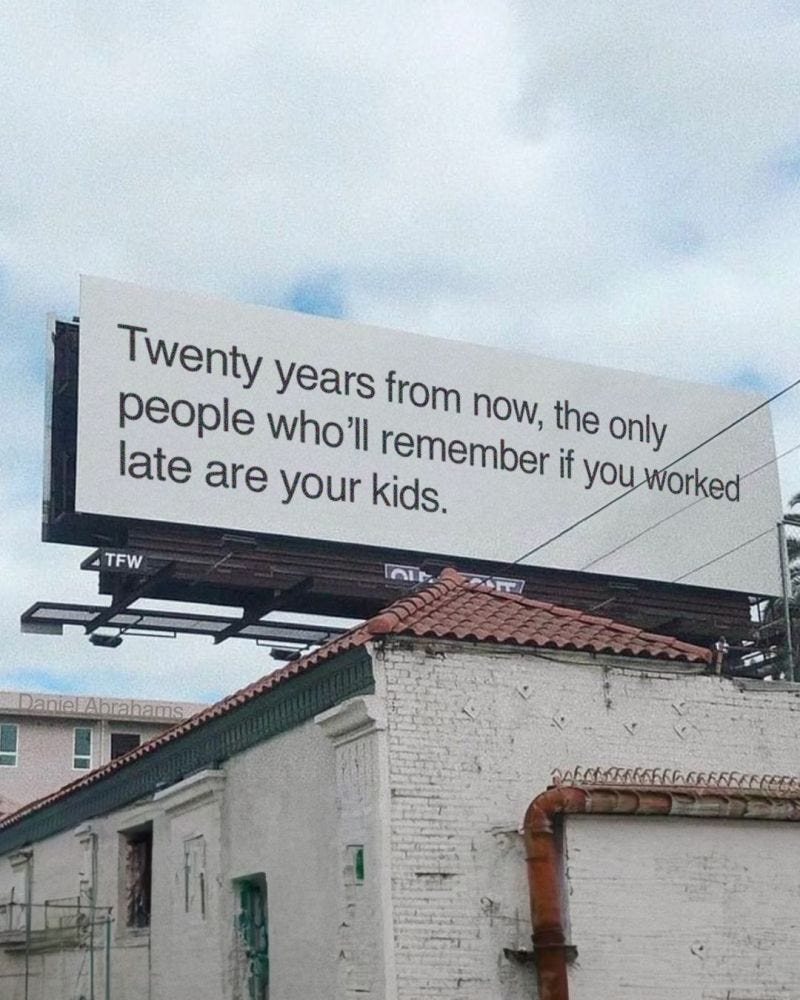
That’s it for this week!
You can support this newsletter by sharing it with your friends and colleagues or by ☕️ buying me a coffee which will help me spend more time on the newsletter and pay for my domain hosting and research tool expenses.
Thanks for supporting my work! 😊